Saturday, October 28, 2017

Week 6

In the LDS culture, marriage is one of the most discussed topics there is. I can even remember talking about marriage way back when I was a Sunbeam. This did not end when I entered Young Women's, in fact it intensified. I don't think I ever had a lesson that wasn't somehow related back to marriage. Marriage is a BIG DEAL. But I want to talk about the side that we don't really talk about in church. Marriage is not perfect. I grew up expecting to find my Prince Charming, a perfect man who was destined for me and who would do no wrong. Ladies and gentleman, nobody is perfect. There is nobody out there who is absolutely perfect and destined for you. Love is a choice. 

"When people marry, they have certain expectations about what their marriage will involve. Among other things, they tend to expect that marriage will make them happy and fulfilled, that it will last, and that their spouse will be faithful. Some of these expectations may be unrealistic. If, for instance, you expect that your spouse is always going to make you happy or that your relationship will be invulnerable to infidelity, your expectations are unrealistic. A survey of high school students reported that 60 percent agreed that when they married, their spouse would fulfill nearly all their needs for security, support and companionship. If they sustain such expectations, they are expecting more than they are likely to get" (Lauer and Lauer, Chapter 8).

I once read a quote that said something to the effect of 'be happy because you are happy, not because someone else makes you feel happy'. If our happiness depends on someone else, then we are setting ourselves up for hard times. As I said earlier, I firmly believe that love is not just a feeling, it is a choice to continue loving someone even when they let you down. This is why I think it is so important to understand who you are, what your wants and needs are, and what qualities you want in a potential spouse before you begin to look for an eternal companion.  

"Commitment to the person means that you are determined to work through troubled times. In contrast, commitment to the institution means willingness to simply endure troubles rather than to work through them. Those who work through problems, rather than endure or wait them out, find the quality of their relationship greatly enhanced" (Lauer and Lauer, Chapter 8). If two people are content with themselves and they do not rely fully on the other person for happiness, I believe that working as a partnership will be much easier for both parties. Problems in a marriage are not things that can simply be waited out. It is important to be committed to that person because you choose to keep making that choice, rather than be committed just because you made the promise to be and you are forced to uphold it. I also believe that expressions of love help to strengthen this partnership. "Commitment also grows as people's satisfaction with their relationship increases. While some decline in the affectional behavior noted is both normal and necessary after the honeymoon period, it is important for the couple to guard romance. The expression of affection is important throughout the marriage. It isn't enough to merely feel affectionate. That affection must be expressed" (Lauer and Lauer, Chapter 8).

I believe that it is important to go into a marriage with your eyes open, knowing that there will surely be bumps along the way and being firm enough in your own happiness to be able to work through them with that special person. I also believe that showing love to your spouse often strengthens this mutual bond of commitment. Marriage is a beautiful institution and it takes two loving and committed people to make it work. Love is a choice.  

Saturday, October 21, 2017

Week 5

Finding someone to spend eternity with is a big deal. Especially in the LDS community we put a lot of pressure on dating. But how do we know when we've found the right person? Many times, my friends and I have found ourselves worrying after one or two dates whether that person could be The One. But let’s get one thing straight here: date does NOT equal marriage. Dating is simply for getting to know a person. So what qualities are we looking for when we are getting to know someone? Studies show that the two most common things people look for are attractiveness and similarity. Similarities are the things that two people have in common such as religion, ethnicity, education, morals, attitudes, etc. Attraction is also important because it factors into first impressions. First impressions are when the only thing you know about that person is what you can assume by looking at them (Lauer & Lauer Chapter 05, 06). So, once you’ve found a person who you are physically attracted to and who you have things in common with, what is the next step? Going on a date.

Dating has changed and adapted throughout time. A date used to entail a couple going out and having a fancy dinner and/or doing some sort of fun activity. Technology and culture has vastly changed our idea of what a date is. These days, dating is often renamed “hanging out”. We get together, we cook some dinner, and we chill out and watch Netflix in the comfort of our own homes. It’s cheap and requires little effort. I’m not going to lie, sometimes I myself enjoy a little Netflix and cuddle. But ladies and gents, this is not a date. A date requires some planning, its needs to be paid for, and you need to be paired off. The kind of date a man takes a woman on (or vice versa) says a lot about them. In class, my professor pointed something out that I found interesting. Planned = preside, paid for = provide, paired off = protect. Cheap and comfortable is fun and all, but you really get to see all sides of a person when you are going out and watching how they react in all situations. If they are willing to pay and plan a date, it shows much more about them than hanging out ever would. When I am going on a date I want to know whether a man can preside, provide, and protect me.

One of the things that I think has caused this change in what we consider to be a date is that often men and women are too scared to ask someone out. It’s so much easier to just ask if they want to “hang out”. The word ‘date’ makes it somehow seem much more serious and committal. But let’s think of it this way: one date does not lead to marriage. Even multiple dates don’t. A date means that you have agreed to partner off with that person just for the evening. A date does not even equal a relationship. By going on dates with more than one person, you can see what kind of qualities that you are looking for in your future spouse.

“If you are dating for the purposes of potential mate selection, do not make the mistake of looking for perfection…we sometimes sabotage ourselves by limiting our choices” (Lauer & Lauer, Chapter 05, 06). It is okay to go on dates with more than one person. Unless it is a mutual decision between two people to go steady and find out if what they have is an eternal thing, going on dates with a person is not a commitment. Don’t be scared to ask people on dates. By broadening the pool of choices, you can better identify what personality types fit with yours. Finding an eternal companion is a choice. You must go out and date many people to find who you want to be your eternal companion and who you want to grow with. So… let’s go on dates! Don’t be afraid to ask someone out. Get to know several different personality types and figure out what you are looking for. Love is out there!

Thursday, October 12, 2017

Week 4

Isn't it amazing how different men and women are, and yet we are still completely compatible together? Many of the topics we've gone over in class this week have brought to my mind the concept of nature vs nurture. Nurture is the outside factors that influence a person. For example; school, work, friends, foods, exercise, etc. Nature is the biological factors that influence a person, such as genes. Both of these play a big part in a person's personality. In class, we were asked to make a list of the things that usually identify someone as a male or female. Although I know that these things vary from person to person, these are the things that I normally attribute to each sex. For females I put that they are generally expressive, socially orientated, nurturing, and passive. For males I put aggressive, competitive, and protecting. After completing my list, I wondered how many of these things are learned through nurture and how many are already there naturally. Often, units of society influence a person to behave a certain way. Units of society are things like family, workplace, school, government, and religion.

From the time I was five until I was about twelve I lived in a neighborhood full of boys. There were probably about five or six of them and one of me. I always hung around (and probably annoyed) them while they played. Because I spent most of my time around boys, I definitely had a tomboy side to my personality. I didn't mind getting dirty or playing sports with them and very often I felt like it was my duty to beat them at being a boy and knock their egos down a notch. But despite the fact that I was surrounded by boys, I grew up to be a pretty girly person and the tomboy side of me is almost completely gone. As I contemplated this change in my personality over the years, it occurred to me that many of the changes I made were a combination of influences from society, culture, and nature. Even during my years as a tomboy, I always looked up to older women and wanted to be like them. I also enjoyed girly things because, well, I'm a girl, and that didn't change no matter how much time I spent with the boys. The differences between mine and the boys' personalities was always obvious despite my efforts to be like them, and yet we were still compatible together. I still like to do some things that are considered 'manly', but I am also fine with using my womanly attributes to compliment and work together with the attributes of the men in my life.

In a video called "A Tale of Two Brains" ( https://www.youtube.com/watch?v=3XjUFYxSxDk ) it describes a man's brain as being full of boxes. Each box has something different in it: work, family, school, etc. Men can only pull out one box at a time. Women, on the other hand, have brains that are like a ball of wire. Everything is connected and we can see how one thing influences all the other things. In an example we discussed in class, we talked about how when boys are playing ball and the game stops, it is usually because someone broke a rule and they are pausing to fix it. When girls are playing a game and it stops it is usually because they are establishing and defining relationships/roles.  In other words, boys tend for focus on fixing things, whereas girls look at the emotional side and the connections between everything. A study was done where they asked some men and women to sit at a desk. After they left the room, they asked if they could remember what was on the desk. The men couldn't remember, but the women could remember each object in relation to the others. What I'm trying to show by giving this example, is that women are naturally more inclined than men are to make connections between people and things. Another study showed that men are better at remembering directions (Northeast, street names, etc.) whereas women are better at remembering landmarks in relation to their destination. Both ways of thinking and acting are efficient for each sex and can work even better together.

In summary, men and women are very different. We think differently, we look differently, we act differently...and yet our differences compliment each other perfectly. Where one is weak, the other is strong. Society will sometimes influence the way we see the roles of man and women and often tries to change them, but ultimately we are meant to work together to create an eternal family. This is why it is so important for children to be raised with both a mother and a father in their home, who love each other. Children need both the nurturing nature of their mothers, as well as the protective nature of their fathers to flourish.

If you would like to watch a funny video about the differences between men and women, watch "It's not about the Nail" at https://www.youtube.com/watch?v=-4EDhdAHrOg . In the word's of my roommate's boyfriend, "just stare at that nail", boys.

Friday, October 6, 2017

Week 3

Growing up, my family was always a bit of a closed circle. Our family home was a place of refuge and comfort and not many people were allowed in. I often remember begging my mom to let me have friends over to play after school. The answer was almost always no. This used to frustrate me because my other friend's parents were very welcoming to having people over. As I got older, it became clearer to me that the reason I was not allowed to have friends over often was not because we barred outside influences, but because our home was a place for us to spend time together. We spent so much time outside the home, going to school or work, that when we had the opportunity to spend time together it was usually in our home. When influences from outside the home were brought in too much, our family unity tended to get stretched and tensions got high. On special occasions I was allowed to invite people over, but ultimately we all understood that our home was our little nest where we came to seek refuge from the world.

Because of the closeness of our little family circle, we all have very defined roles. These roles have changed and adapted with circumstances over the years. I am the oldest child in my family, and this was a role I did not take lightly. My brother and I like to joke that I am the 'burnt pancake' in our family. When cooking pancakes, the most mistakes are usually made with the very first one because you don't quite have a feel for how hot the pan is. The first pancake usually teaches you not to leave the following pancakes on for as long, or they will get burnt as well. Because I am the oldest child, I like to think of myself as the pioneer sibling. My siblings often would see the mistakes I made and learn from them. They also would come to me for advice because I was the most experienced. This is one role that I have that has never changed.

I can remember one distinct time when changes in the family dynamics prompted a shifting in roles. When I was around 12 or 13, my mom became very involved in a crafting blog of hers. Up until that point, our family roles had been pretty much the same my whole life. My dad was the provider and was very often at work. My mom stayed home with us. There were certain things that I had just learned to expect and had taken for granted. I usually expected to get home from school where my mom would be there to greet me and ask about my day. I would then spend the rest of my time doing other things, while my mom went around doing things in the house and cooking dinner. I remember when she started to get more and more involved in her blog, however. I started to notice little shifts at first, but then one day I realized that when I came home from school she would barely look up from her laptop to greet me. I often had to repeat myself several times before she would hear what I said. We didn't get home cooked meals as often, it was usually cereal every night. Because my mom was so involved in building her blog, I began to start stepping into her role. As the oldest, I felt that it was my obligation to take care of my siblings if she wasn't. At one point I realized that I had actually started to resent my mom for making me take on her role. I absolutely hated that blog. This went on for months. I learned to expect to come home and do the best that I could to take care of my siblings just until my dad got home from work and he could help me out. One memorable time, my mom was not as absorbed in her blog as she usually was and she tried to correct my youngest brother's behavior. He ignored her, turned to look at me, and then said 'Do I have to, mom?' I could just see the metaphorical slap to the face in my mom's eyes. I believe that this was the moment when my mom realized the shift in roles and began to come back to the fold.

 In class, we discussed how when a family member begins to stray from their role, often the others will unite and work together to bring that person back. I could see this happen in my own family. My siblings and I didn't have the authority or power to show to my mom that we did not like this shift in the family roles, and so we did so in other ways. This often was lashing out and making risky decisions to try and get her attention. In the class readings, I learned that decreased time as a family is associated with adolescent's loneliness, isolation, and risk-taking behavior. "We are social creatures- Intimacy is a need..not an option"(Lauer, Lauer). I think this is especially applicable to the relationship between parents and their children. To this day, it still is hard for me to let my mom get too close to me emotionally. For a long time I didn't feel like she deserved to know what was going on in my life because she hadn't shown enough interest before. She no longer uses her blog and she has made a lot of effort to fit back into the role she had before, but the scars are still there.

After this initial shift, another shift was made that was similar to how we were before. My mom has stepped almost completely back into her role as mother, and I still have more responsibility than I did previously. My youngest siblings still often listen to me a little more than my mom, but they acknowledge her as an authority figure whom they can go to and she will respond. This experience has shown me the importance of family roles and systems. What systems does your family have? Are there any roles you would like to change or improve? Often, looking inwards at your family can create a better understanding of how your experiences have molded and changed you. I invite you to take a look at your personal life and find a role or relationship that you can improve on. I promise if you do this, it will provide a greater sense of family unity and love.

Friday, September 29, 2017

Week 2

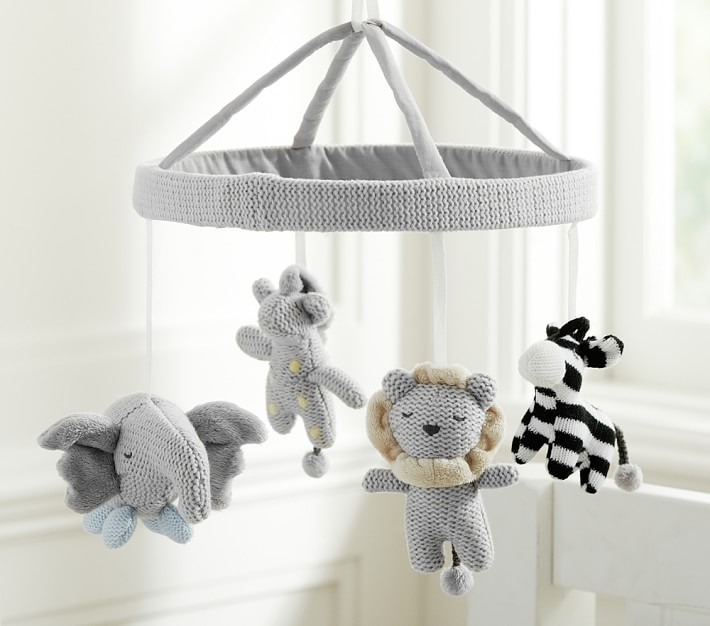
This week, I was interested to learn more about the roles that are played within families and how each member interacts with the others. One of the theories we learned about was the Systems Theory. This is the idea that the sum of the parts are less than the system and that people in a families play roles. In the class readings, an analogy was presented that stuck out to me. It compared a family to a mobile which hangs over a child's crib. On the mobile, there are multiple objects hanging from wires. 
Image result for crib mobile
If one of the objects is touched, the rest of them begin to move. If one of the objects is taken off, the whole mobile becomes unbalanced. It compared this to the system of a family. Something one member of the family does will affect all of the others and possibly even generations down the line. This got me thinking about how important our actions and reactions are. I think that very often we get caught up in a cycle that we don't realize is happening. For example, a wife could think that she is nagging because her husband is withdrawing, but the husband could think that her nagging is the reason he is withdrawing. We often think the blame for a problem lies with others. However, are we just not recognizing that there is an ongoing pattern that needs to be broken? 

I have seen things like this happen in my own family. Usually when I get in a fight with my brother it is over the same things that we have fought over again and again. Nobody ever thinks they are the bad guy and the problem is never resolved. There is a simple solution: Communication. If we spent more time explaining why we think the way we do and why we chose to do the things we did, there would be less bickering over cause/effect and right/wrong.
The month before I moved out of my house to start my first semester, I had something like this happen to me. One of the roles I have in my family is being the oldest child. I am the first one to reach every new stage of life. So having me move off to college was a whole new thing to my parents. As the time got closer for me to move off to college, my dad began to start expressing (and this is a light way to put it) his concerns about my financial situation. For a whole month we could not stand in the same room together without the tension being so thick you could cut it with a knife. After a while, I began to notice a pattern. We would argue and then we would ignore each other for a while. Eventually we would become more civil, but right when I thought I was in the clear he would pounce on me again. This cycle continued over and over and over again. One day I was talking to my mom and she mentioned that our bickering was very exhausting for her because she had to play the role of peacemaker almost constantly. This came as a wake up call to me. Later on I talked to my brother and he mentioned that he had started hiding in his room when my dad got home from work so that he wouldn't get caught in the backlash. As far as I'd been concerned, I thought my dad was in the wrong and that he was being irrational. I also saw it as an abuse of his power over me, as my father, which goes along with Conflict Theory. Conflict Theory is the idea that power = influence. Basically what was happening with us is that we were in a continuous power struggle and neither would back down. After realizing the effect it was having on my other family members, however, I decided to finally ask him WHY? I learned that he had been working overtime so that he could help me pay for college and that he was concerned about the way I used my money because he cared about me and he didn't want all of his hard hours working to go to waste. After learning this, I felt ashamed that I had pushed back so hard. If I had communicated better, so many things could have been resolved early on. 

The experience helped me to understand the chain reactions that happen in a family. Sometimes we get stuck in a cycle that never gets resolved because we simply do not communicate or we won't put ourselves in their shoes. We just let it sit and accept it as the way things are. Sometimes we need to take a step back and consider how our actions will affect the rest of our family. We are all attached to the same mobile. If one of us is pushed the rest of us will move as well, whether we want to or not. If we start to look outside our bubble and pay more attention to how our actions affect those around us, our relationships with our family members will strengthen. I challenge all of you to start to pay more attention to what goes on in your families. Are you stuck in any cycles? Are you doing anything that could be affecting someone else? If you do this, I promise there will be improvement. 

Thursday, September 21, 2017

Week 1

During this week I have pondered a lot about the choices that couples are faced with when deciding matters regarding having children. How do I decide how many children to have? Should finances play a part in that choice? The Lord has shown us time and time again how important families are to the Plan of Salvation. He has given us temples so that we may be sealed to our spouse and children for eternity. He gave us 'The Family: A Proclamation to the World' so that we may know how to raise our children in a loving and gospel centered home. The world grows increasingly more wicked every day and Satan is trying to find any way to convince us that we should not have children. He does not want them to be able to gain bodies. But the Lord wants all of his sons and daughters to have the opportunity to come to earth and receive bodies. 
A few weeks ago I went to an extended family reunion. The oldest person attending was my great grandma. My great grandpa had already passed away a number of years prior. As I looked around, I realized that every single person at the party was there because of my great grandparents. My great grandma had given birth to six kids and each of them had kids who had also had many more kids. It astounded me that because of my great grandparents, hundreds of spirits, including me, were able to come to earth and gain bodies. What's more, each and every one of us had been raised with the gospel. How amazing is that? Then it occurred to me that if my great grandparents had chosen to have only five kids instead of six, how many of these spirits would not have been able to gain bodies? Or would have been born to families who were not blessed to have the gospel in their lives? 
The Lord has tasked us with the responsibility to "Be fruitful, and multiply, and replenish the earth" (Genesis 1:28). For every child we have, generations upon generations of His children will be able to come to earth to be tested and receive mortal experience. In class this week, Brother Williams shared with us a quote that particularly stuck with me.
 "There are multitudes of pure and holy spirits waiting to take tabernacles, now what is our duty?—To prepare tabernacles for them; to take a course that will not tend to drive those spirits into the families of the wicked, where they will be trained in wickedness, debauchery, and every species of crime. It is the duty of every righteous man and woman to prepare tabernacles for all the spirits they can."
- President Brigham Young
I particularly liked his use of the word 'tabernacle'. It is a reminder that our bodies are temples and we are honored with the opportunity to be able to create one for a spirit who is waiting in heaven to be able to receive it. The more children who are born into a loving and gospel centered home, the faster the gospel will spread through this world that is rapidly becoming more and more influenced by Satan.
As for financial matters, I believe they are definitely something to take into consideration when having children, but even if circumstances are not ideal, I believe that the Lord will provide a way. The apostles and prophets counsel us to be as financially stable as we can be. However, I do not believe money should be used as a reason to delay having children. He will never abandon us if we are doing all we can to be obedient to Him. 
There is a family that I am very close to which has seven kids. However, their parents have always struggled with money and their living circumstances aren't ideal. I have pondered before whether or not their parents did them a disservice by bringing them into a life full of money struggles and constant stress. But despite those trials, each of their children has grown up to be missionaries and are the most worthy and honest people I know. I actually think it is a shame that they were not able to have more children than they did. 
Ultimately, the decision of how many children to have is a decision that is between a couple and the Lord. However, we should always keep in mind the blessing and honor it is to be able to create a tabernacle for a beautiful spirit waiting to join a loving and gospel centered family for eternity. 

Friday, September 15, 2017

About Me

Hello everyone! My name is Emily Shumway. I am a sophomore at BYUI and I am majoring in marriage and family studies. Someday I would really love to be a counselor because I enjoy helping others to recognize their full potential and worth. I am from Blackfoot, Idaho and I am the oldest of four kids. My greatest goal in life is to be a wife and a mother. I enjoy reading and spending time with my friends. I also absolutely love cats, pasta, and Netflix. I have created this blog so that I can share the insights I have in my Family Relations class with all of you. I hope you enjoy!